Pakistan Tours South Africa in 2024/25: South Africa Wins Tests, Pakistan Claims ODI Series
Nov, 24 2025
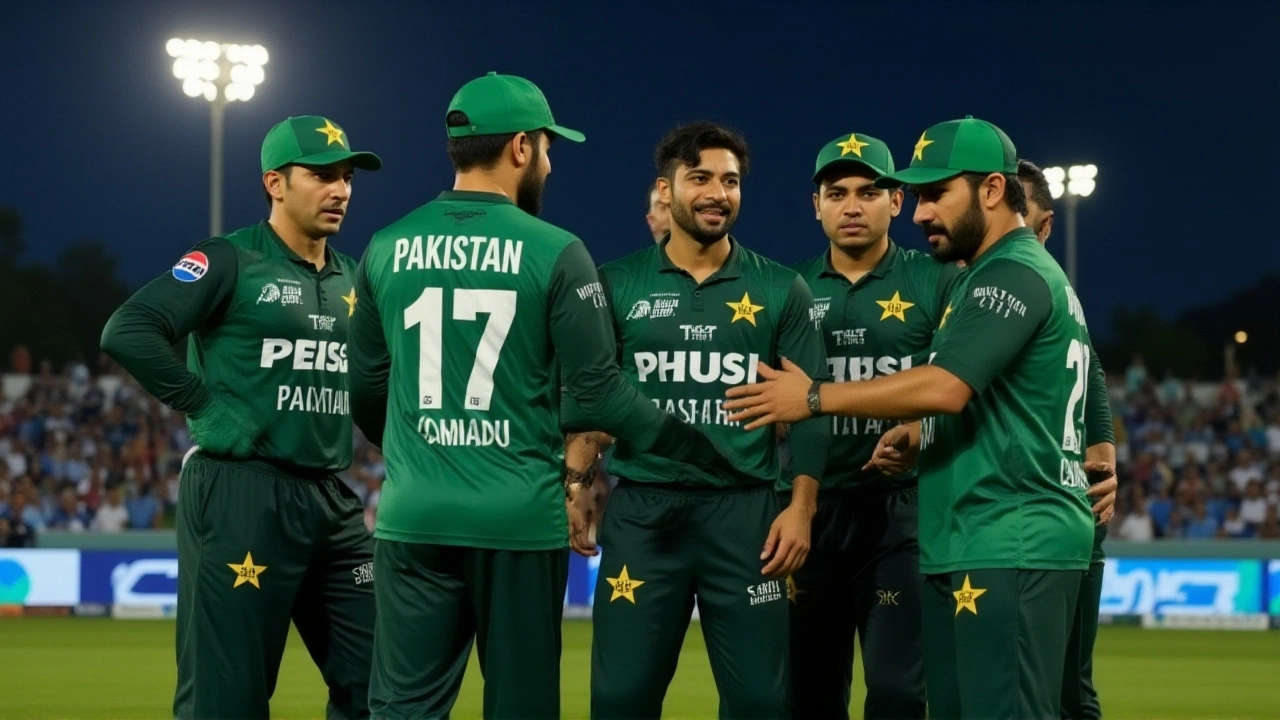
When the Pakistan national cricket team landed in South Africa on December 10, 2024, few expected the dramatic swings that would define the tour — a crushing Test defeat, a stunning ODI turnaround, and a T20I series marred by rain. The five-week journey across five iconic grounds — from the coastal breeze of Kingsmead in Durban to the historic Newlands Cricket Ground in Cape Town — delivered more than just results. It delivered heartbreak, redemption, and a glimpse of Pakistan’s evolving identity under pressure.
From T20I Struggles to ODI Triumph
The series opened with a familiar script: South Africa, playing in front of a roaring home crowd at Kingsmead, outplayed Pakistan by 11 runs in the first T20I. George Linde’s disciplined death bowling sealed the deal, and the message was clear — South Africa meant business. The second T20I in Centurion flipped the script. Pakistan, chasing 207, posted 206/5 thanks to a blistering 78 from Saud Shakeel. But Reeza Hendricks, calm as ever, guided South Africa to victory with 89 off 48 balls. The third T20I, scheduled for Johannesburg, never happened. Rain washed out the match, leaving the series tied 1-1 with one abandoned. South Africa took the series 2-0.Then came the ODIs — and everything changed.
On December 17, in Paarl, Pakistan looked outclassed as South Africa posted 239/9. But Salman Agha, a 23-year-old opener making his ODI debut, played like a man possessed. His 92 off 102 balls, laced with 11 boundaries, anchored a chase that felt impossible. Pakistan won by three wickets with four balls to spare. The crowd fell silent. The team celebrated like champions.
Three days later, in Cape Town, Pakistan delivered a statement. Batting first, they smashed 329/10 — their highest ODI total against South Africa in 15 years. Kamran Ghulam, the 20-year-old middle-order batter, smashed 84 off 62 balls. Then the bowlers — Shaheen Afridi, Haris Rauf, and Naseem Shah — turned Newlands into a graveyard. South Africa collapsed to 248 in 43.1 overs. An 81-run win. The Pakistani dugout erupted.
The final ODI in Johannesburg was a masterclass in resilience. Pakistan posted 308/9, but rain interrupted South Africa’s chase. When play resumed, the DLS target was 272. South Africa managed only 271 in 42 overs. Saim Ayub, who’d scored 76 in the first innings, was named Player of the Match. Pakistan had done the unthinkable: won the ODI series 2-1.
Test Series: South Africa’s Dominance
The Tests told a different story. On Boxing Day, at SuperSport Park, Pakistan looked competitive — until the final day. After scoring 211 and 237, they needed 151 to win. South Africa’s second innings, 150/8, was a quiet, clinical demolition. Keshav Maharaj’s 4/47 and Marco Jansen’s 3/37 buried Pakistan’s hopes. The win felt inevitable, not thrilling.
The second Test in Cape Town was a spectacle of sheer dominance. South Africa, led by Dean Elgar’s 121 and Rassie van der Dussen’s 172, piled up 615 in their first innings — their highest Test score at Newlands since 2018. Pakistan, reeling, managed just 194. Their second innings, 478, was heroic. Babar Azam’s 124 and Mohammad Rizwan’s 117 offered pride. But by then, it was too late. South Africa chased 61 in 11.1 overs, losing only two wickets. The 10-wicket win was a statement: South Africa are a top-tier Test side again.
Why This Series Matters
This wasn’t just another tour. It was Pakistan’s fifth official series in South Africa since 1997 — the first since apartheid-era bans were lifted. Each tour has been a barometer: 1998 was about survival. 2002 was about proving they belonged. 2007 was about beating them. 2019 was about rebuilding. This one? It’s about evolution.
For Pakistan, the ODI wins signal a generational shift. Agha, Ghulam, Ayub — all under 24 — are the new backbone. Their confidence, especially under pressure, suggests the team is no longer defined by its old guard. For South Africa, the Test dominance confirms their resurgence. They’ve gone from rebuilding to reigning.
Attendance across the eight matches exceeded 150,000. The crowds were electric — especially in Cape Town and Johannesburg. The stands weren’t just full; they were loud, proud, and deeply invested. Cricket, in its purest form, was alive.
What’s Next?
Pakistan now heads into the 2025 ICC Champions Trophy with renewed belief in their ODI unit. But the Test series loss exposes cracks — particularly in the top order and against pace on green pitches. They’ll need to address this before facing Australia and England next year.
South Africa, meanwhile, will look to build on this momentum. With a balanced squad and home advantage, they’re serious contenders for the 2025 World Test Championship final. The next time these two teams meet — likely in Pakistan in 2026 — the stakes will be even higher.
Historical Context: A Legacy of Resilience
Pakistan’s last full tour of South Africa was in 2018-19. Back then, they lost the Test series 2-0 and the ODIs 3-0. The T20Is were split 1-1. This time, they flipped the script in ODIs. That’s progress. And it’s not just about wins — it’s about belief. In 2018, Pakistan’s batsmen folded under pressure. In 2024, they fought. Even in defeat, they didn’t break.
Cricket South Africa, for its part, has shown it can host world-class series without the distractions of political tension. The collaboration with the Pakistan Cricket Board was seamless. No controversies. No delays. Just cricket.
Frequently Asked Questions
How did Pakistan win the ODI series despite losing the Tests?
Pakistan’s ODI success came from explosive batting from young players like Salman Agha, Kamran Ghulam, and Saim Ayub, who all scored match-winning knocks under pressure. Their bowlers, especially Shaheen Afridi and Haris Rauf, exploited South Africa’s middle-order fragility. While the Test team struggled against pace and spin on home pitches, the ODI unit adapted quickly, winning two of three matches with a combination of aggression and composure.
Why was the third T20I abandoned?
The third T20I at The Wanderers Stadium in Johannesburg was abandoned without a ball bowled due to persistent rain and a waterlogged outfield. Despite multiple attempts to dry the pitch and clear the covers, the ground staff couldn’t make the surface playable. This was the first match in the series to be called off, and it didn’t affect the series outcome since South Africa had already won two of the three scheduled matches.
Who were the standout players for South Africa?
George Linde was instrumental in the T20Is, especially with his death bowling and lower-order hitting. Reeza Hendricks delivered the match-winning 89 in the second T20I. In the Tests, Dean Elgar and Rassie van der Dussen formed a formidable top order, while Keshav Maharaj’s spin and Marco Jansen’s pace proved lethal. All three were named Player of the Match in their respective games.
What impact did this series have on ICC rankings?
South Africa climbed to No. 3 in the ICC Test rankings after the series win, their highest position since 2021. Pakistan dropped slightly to No. 7. In ODIs, Pakistan moved up to No. 5 after their 2-1 series win, their best ranking in five years. South Africa remained at No. 2. The T20I series had little effect, with both teams unchanged in the rankings.
How does this series compare to previous Pakistan tours of South Africa?
Unlike the 2018-19 tour, where Pakistan lost all formats, this series showed marked improvement — especially in ODIs. The 2002-03 tour saw Pakistan win a Test in Cape Town, but they lost the ODI series 3-0. This time, they won the ODI series and only lost the Tests by narrow margins. The team’s resilience, particularly in chasing targets, suggests a cultural shift toward confidence rather than fear on overseas pitches.
Will Pakistan return to South Africa soon?
Yes. The next bilateral series is scheduled for late 2026, with Pakistan hosting South Africa in a full-format tour including Tests, ODIs, and T20Is. The PCB and CSA have already agreed in principle, and the tour is expected to be the first major international series in Pakistan since the 2023 Asia Cup. Fans are already anticipating a rematch, especially after the dramatic 2024/25 series.